
The ICMR has approved over 200 labs (both public and private) for COVID-19 testing through-PCR machines.
However, the R-values of major cities, Mumbai, Kolkata, Chennai, Bengaluru, are over 1.
The next wave is likely to be far smaller than the second wave that peaked at a record 400,000-plus daily cases on May 7 and declined sharply thereafter.

Dr Karthiyayini Mahadevan tells you how to differentiate between a cold, flu and COVID-19 and take appropriate action.
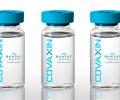
Bharat Biotech is in the middle of conducting a phase 3 trial with 22,000 subjects.

Most Indians have acquired hybrid immunity which means immunity developed through vaccines and also natural infection protecting them from different COVID-19 variants.
British intelligence agencies now believe it is 'feasible' that the COVID-19 pandemic began with a coronavirus leak from a Chinese bio laboratory, a media report said here on Sunday, prompting Vaccines Minister Nadhim Zahawi to demand that the World Health Organisation (WHO) must fully investigate the origins of the deadly virus.
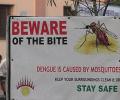
The impact of a 'dengue-COVID-19' season would entail two different diagnostic tests and extract a huge toll on patients too, each disease making the other more complicated to deal with and perhaps more fatal.
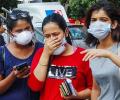
In response to a question on whether younger population were getting more affected, Indian Council of Medical Research Director General Dr Balram Bhargava said the comparison of data during the first and the second wave of COVID-19 has shown that there is not much age difference.

Ganguly will be ready for the next course of procedures or medical intervention after about 2-3 weeks
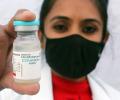
Serious AESI, which included stroke and Guillain-Barre syndrome, were reported in one per cent of individuals, the study, which looked at long-term safety of the BBV152 vaccine in adolescents and adults, claimed.

Researchers said outbreaks of such an illness have the potential to wreak economic havoc in many countries across the globe that rely on the pork industry.

The rapid surge in cases during Delhi's fourth COVID-19 wave was mainly driven by the Delta variant, which likely has immune-evasion properties and counted for 60 per cent of the cases in April, according to a new study.

Nasal droplets fall within 2 metres from a COVID-19 infected person and the aerosols can travel in air up to 10 metres, the Office of the Principal Scientific Adviser said on Thursday, adding that proper ventilation can decrease the risk of transmission.

The PM directed officials to evaluate various technology tools to ensure efficient and timely vaccination in due course of time. He also emphasised that detailed planning for such large scale vaccination should be undertaken immediately.
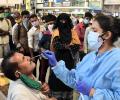
The decision was taken at a cabinet meeting chaired by Chief Minister Uddhav Thackeray, Health Minister Rajesh Tope told reporters.
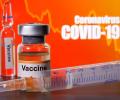
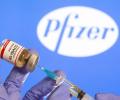
This means there are now four promising vaccines on the horizon after Pfizer-BioNTech, Sputnik and Moderna already reporting good preliminary data from Phase 3 trials.
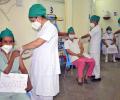
Experts said the strain has not propelled a surge in cases like Omicron, but advised strict adherence to COVID-19-appropriate behaviour.

According to CoWIN data, only 73 vaccination centres are currently active in India, of which 32 are government-run.

The ministry, however, said it could not be sufficiently established yet if these variants were behind the recent spike in COVID-19 cases in some states.
The yet-to-be peer-reviewed study, posted recently on the preprint repository BioRxiv, found that the Alpha, Beta, Delta, and Omicron variants exhibited more than two-fold longer survival on plastic and skin surfaces, than the Wuhan strain.

'If you want to protect yourself just maintain good hygiene, wash your hands often and try not to touch your face, your mouth or nose without cleaning first'
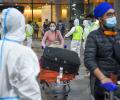
According to SOP, those testing positive will be isolated in a separate unit of an institutional facility.

The wife and brother-in-law of an NRI man, who had been found infected with the Omicron variant of COVID-19 here in Gujarat a week back, were also detected with the new strain, officials of the Jamnagar Municipal Corporation (JMC) said on Friday.

The Indian SARS-CoV-2 Genomics Consortium is closely tracking the new variant of COVID-19 called B.1.1.529 and its presence has not been detected in the country yet, officials said on Friday.
These 51 cases were detected from over 45,000 samples sequenced so far in the country.
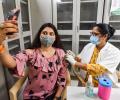
Vaccines Covishield and Covaxin work against SARS-CoV-2 variants Alpha, Beta, Gamma and Delta, while effectiveness tests against the Delta Plus variant is ongoing, the government said.

The Union health ministry on Friday said while there is no evidence to suggest that existing vaccines do not work on the Omicron variant of SARS-CoV-2, some of the mutations reported may decrease the efficacy of the jabs.

'This virus may have more immune evasion capability and therefore, it may make you more sick.'
The double mutant variant, also known as B.1.617, is mostly dominating Maharashtra (761), West Bengal (124), Delhi (107) and Gujarat (102).
The WHO said that studies have highlighted that the spread of the second wave has been much faster than the first in India.
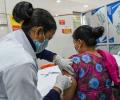
'In case of shortage of other raw material, like filters and bags, one can try to develop another vendor. However, for chemicals as critical as adjuvants, this is not possible'
The results were the same in seniors, with a median age of 76, and caregivers, with a median age of 48, and old alike, according to the researchers.

The Omicron variant of COVID-19 is in the community transmission stage in India and it has also become dominant in multiple metros, where new cases have been rising exponentially, said Indian SARS-CoV-2 Genomics Consortium.

'The immune protection may well wane somewhat, and that's what we have to monitor.' 'Should it wane to the point where vaccinated individuals are getting severe disease, then we really will need to give them booster shots and that'll apply regardless of what vaccine they've got the first time.'
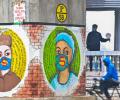
The committee acknowledged that the COVID-19 pandemic may be approaching an "inflexion point".

The Indian Council of Medical Research's national task force for COVID-19 has decided against including antiviral drug Molnupiravir in the clinical management protocol for COVID-19 as of now, official sources said on Tuesday.

Amid a gradual rise in daily Covid-19 cases, the Union health ministry said on Thursday that the XBB.1.16 subvariant of Omicron might be the dominant virus strain in the country but there has been no reported increase in the rate of hospitalisation or death so far.

Maharashtra has recorded a 17.7 per cent rise in coronavirus cases compared to last week, according to a state health department bulletin.
In a significant development, India is believed to have placed a funding request of around $55 million in its first call with the Pandemic Fund of the World Bank, sources said. The fund has been set up to finance critical investments in a bid to strengthen pandemic prevention, preparedness, and response capacities at national, regional, and global levels, with a focus on low- and middle-income countries. It was created in the aftermath of the Covid-19 global pandemic.
 © 2026 Rediff.com - Advertise with us - Disclaimer - Privacy Policy - Sitemap - Feedback - About us - Terms of use - Grievances